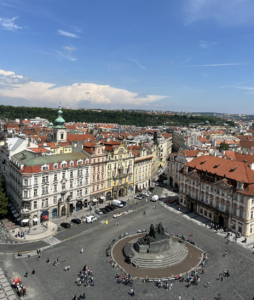
Another International trip and this time it was cities in Europe. On the 20th of May we landed in Prague, Czech Republic and walked around the neighbourhood. The next day we visited the Prague castle complex , the square and the jewish quarters.
We then left to a place which was an hour from Prague ie Kutná Hora, home to the infamous Sedlec Ossuary. A chapel is decorated with human bones, chandeliers, coat-of-arms,all bones. Yes sounds haunting, but architecturally mind-blowing.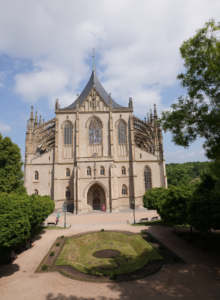 A short walk away was St. Barbara’s Cathedral, a Gothic masterpiece so intricate it feels like stone lace. Standing there, I realised medieval architects clearly didn’t believe in minimalism.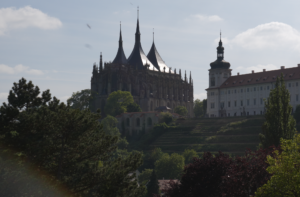
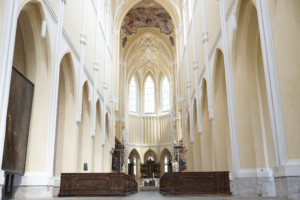
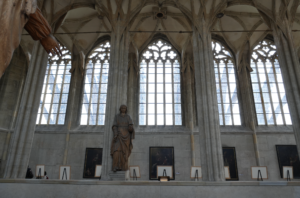
As I explore more medieval architecture I learnt that it was known for its grandeur, intricate decoration (stained glass, carvings), and massive scale, especially in Gothic cathedrals and Romanesque churches, though some simpler domestic buildings existed, the iconic medieval style is elaborate, emphasizing height, light (Gothic), and thick walls (Romanesque).
On 22nd May we travelled to Saxon Switzerland & Czech Wilderness. This day was dedicated to legs, lungs, and humility. We hiked up to the Elbe sandstone mountain range on both sides of the national border between Germany and Czech Republic and saw the remains of the Medieval rock castle build in the early 13th century on a sandstone reef . 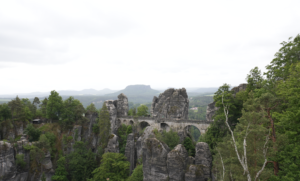
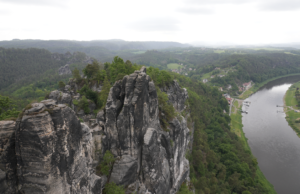
After a snack break ( ate Pretzel and sausages) we walked into the Deep Wehlgrund valley , Rathen area, Saxon Switzerland in East Germany .W e walked around 3 kms and reached the bottom dock where a 450m long section was accessible only by boat. Wild Gorge is a deep rocky canyon of the river Kamenice in Czech Republic.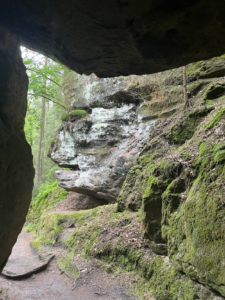
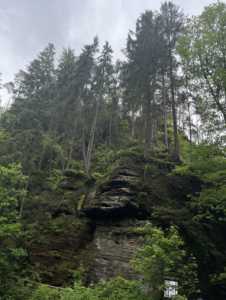
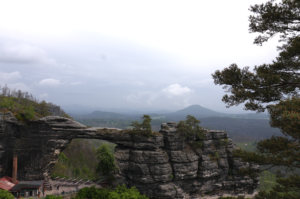
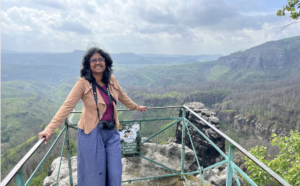
After a scrumptious local meal and beer, we hiked around 5 kms ( to and fro ) into the deep forest, wild rivers and massive sandstone formations. The final push led us to Pravčice Gate (archway) , the largest natural stone arch in mainland Europe and is listed as a Czech national monument. The views from the top of the mountain range is unforgettable . Standing there, exhausted and awestruck, I felt small — in the best way possible.
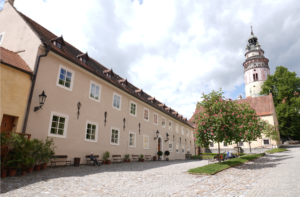
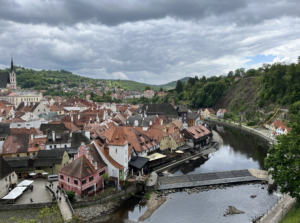
On 23rd May, we headed to Český Krumlov, a UNESCO World Heritage Site that looks suspiciously unreal. A 13th-century castle has Gothic, Renaissance and Baroque elements, manicured 11 hectare garden, an original 17th century Baroque theatre, and the panoramic views of the old town and the Vlata river from the top of its round belltower is breath taking. Also had one of the finest potato dumplings which is the staple local food in Czech. Soft, comforting and slightly dangerous because you will not stop at one.
The 24,25th & 26th May was spent in Salzburg . We celebrated by sister’s birthday at Salzburg . This city is elegant, quietly confident, like someone who knows they’re cultured but won’t brag about it . A city known as the birthplace of Wolfgang Amedeus . Also in Salzburg was a town called Braunau am Inn where Adolf Hitler was born. Salzburg balances beauty with reflection.
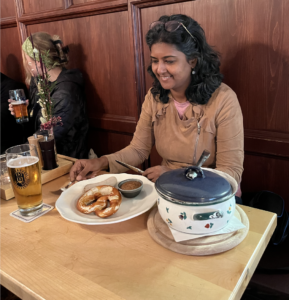
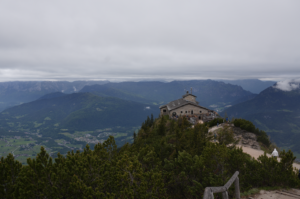 On the 25th May , I visited was Hitler’s Eagle’s Nest , a building altitude of 1834 meters above seal level. It was originally built as a diplomatic meeting house for the Nazi regime in 1938. Hitler himself visited only 14 times. After an overdose of history it was time to have lunch and I decided to try some local delicacy – German beer and white sausage with mustard sauce.
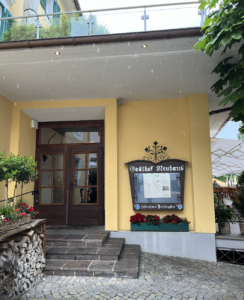
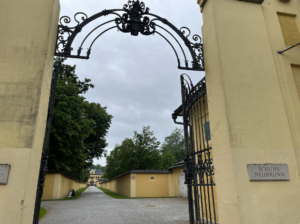
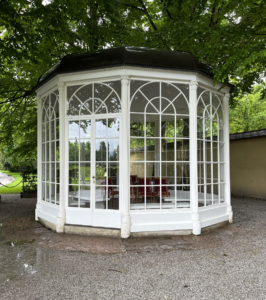
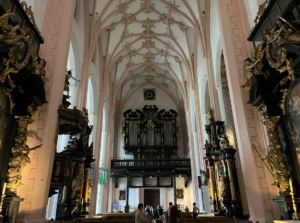
If you go to Salzburg, you can’t miss watching the spots where the famous movie Sound of music had been shot. Places like the Hellbrunn Palace , the Gazebo, Leopoldskron Palace , Basilika St. Michael in Mondsee Abbey , Mirabell gardens, Nonnberg Abbey — resisting the urge to twirl dramatically.
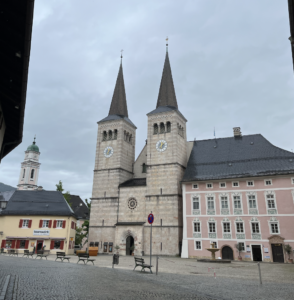
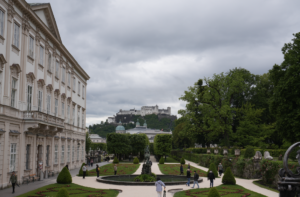
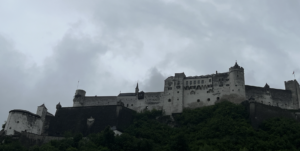
On the 26th , I took a walking tour of Salzburg city. After the tour ended , I went up the Hohensalzburg fortress via a funicular ride . The fortress is of the largest intact medieval castle complexes in Europe from the 11th century. From the top, a 360-degree view of Salzburg that makes you pause, breathe, and take far too many photos. Below lay the DomQuartier, Salzburg Cathedral, St. Peter’s Abbey, Mozart’s statue — a compact crash course in European art history.
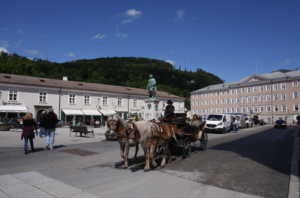
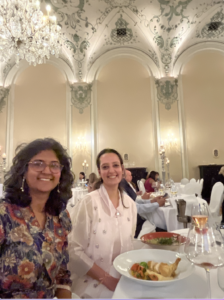
However for me the highlight and unique experience that I was looking for from the time I decided to visit Salzburg was the Mozart concert followed by dinner at the St Peter’s Stiftskulinarium one of the oldest restaurants in Europe operating since AD 803. Candlelight. Classical music. Austrian cuisine.At that moment, I peaked emotionally.
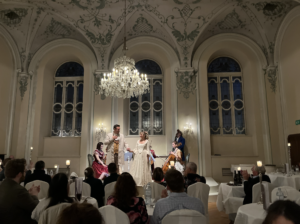
Last of the cities I visited in my Europe trip was Vienna from the 27th to 31st May . It’s an experience curated by centuries of emperors, musicians, and obsessive dessert-makers. And yes I did visit the popular palaces. Though I feel each one needs an entire day to absorb and do justice to the palaces.
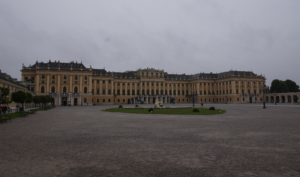 Schönbrunn Palace – Schönbrunn isn’t just a palace; it’s a statement. Once the summer residence of the Habsburg emperors, this Baroque masterpiece reflects what happens when royalty decides comfort should also look magnificent.The palace interiors narrate stories of Empress Maria Theresa, royal diplomacy, and controlled extravagance. But for me, the real magic lay outside with the immaculately landscaped gardens, endless pathways, fountains, and hilltop views that make you feel like you’ve stepped into a period film set. Walking here, I understood something clearly: Europeans didn’t just rule empires — they designed them beautifully.
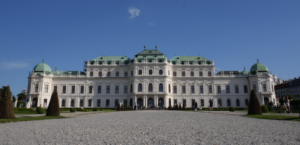
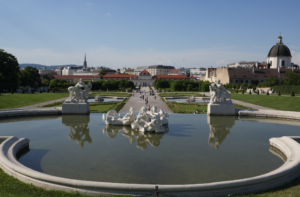
Belvedere Palace – Belvedere is where architecture and art sit down for a serious conversation. Home to Austria’s most important art collections, the palace famously houses Gustav Klimt’s “The Kiss” a painting so iconic that even people who “don’t really get art” stop and stare in silence.The palace itself, with its reflecting pools and geometric gardens, was built as a symbol of victory and prestige. Standing there, I felt Vienna’s deep respect for art as legacy, not luxury.
And Incase you are with a group you better reach early to find out the spots to meet because for a first timer , one can get lost.
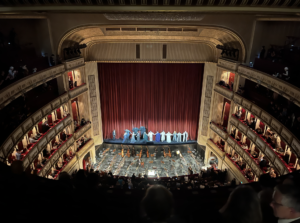
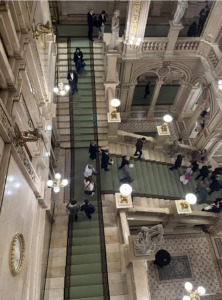
Vienna State Opera – For a filmmaker who loves theatre visiting Vienna and watching a play was a must do . Booked the tickets well in advance. During the time we were around , we saw DAS RHEINGOLD on the 28 May 2025 .one can book tickets from anywhere in the world though www.viennaconcerts.com.The Vienna State Opera is not just a performance venue , it’s a temple. This is where composers like Mozart, Beethoven, and Strauss are not historical figures but cultural family members.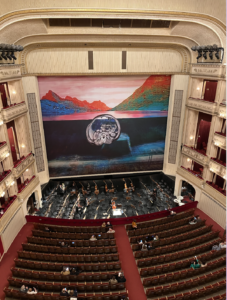
Being a coffee lover I had to explore Viennese’s coffee house culture . Vienna’s cafés deserve their own paragraph , maybe their own UNESCO badge (which they actually have). These are not places to “grab a quick coffee.” They are places to sit, think, read, argue, write, and observe life. Marble tables, bentwood chairs, newspapers on wooden racks, and waiters who look like they’ve been serving coffee since the Austro-Hungarian Empire.
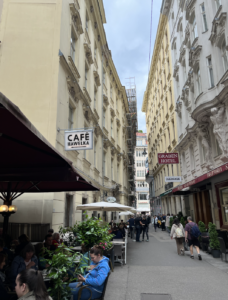
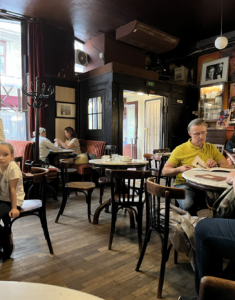
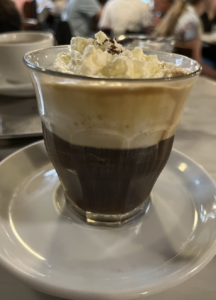
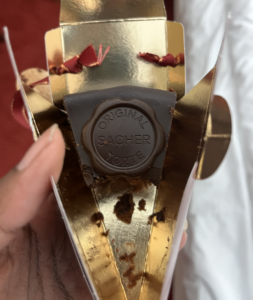
I had the desserts like Sachertorte, Apfelstrudel, creamy cakes that laugh at calorie counts. I came for culture and accidentally stayed for sugar. I wandered through Imperial spaces, admired Klimt and Van Gogh, soaked in classical performances, enjoyed the sight and sound of horse-drawn carriages clip clopping through streets, musicians perform casually in public spaces, and sunsets feel cinematic without trying too hard walking through the rose gardens and riverbanks and sitting in cafés pretending I was a writer from the 1800s (with Wi-Fi). From palaces to opera houses, rose gardens to river views, from boat rides to horse rides. Vienna doesn’t ask what you like — it simply offers everything.
Prague , Salzburg, Hallstatt and Vienna was romancing with art, architecture, history, long walks, longer hikes, and dangerously good desserts. Thanks for reading and Ciao until the next passport stamp.